1. Give decisions time
Every item can bring back a memory. Start by setting aside important documents, keys, photographs and keepsakes. Mark items you are unsure about so they are not removed before a decision has been made.
2. Agree on what to keep
Before booking, ensure the relevant parties agree on the work and handling of belongings, and that the person booking has authority to do so. Decisions on distributing property belong to the estate, not the clear-out team. We follow your instructions; the service does not replace legal advice.
3. Look at the whole property
Belongings may also be in the basement, attic, garage and storage spaces. Clearing requires carrying, a suitable vehicle and sometimes several trips. Floors, lift access and distance to the van affect the workload. If you live far away, organising all this can feel especially difficult.
4. Start with a few details
Send the address, size, floor, lift information and photos. Tell us your preferred schedule and which part feels hardest. There is no need to empty cupboards for the photos. Together, we discuss what you want to do yourself and where help would be useful.
5. Agree the work and price
We assess the job from photos and details or a visit when needed. We agree items to keep, sorting, carrying, removal and transport. End cleaning can be added separately. Waste, recycling and receiving fees are separate and discussed with the quote.
6. We handle the agreed practical work
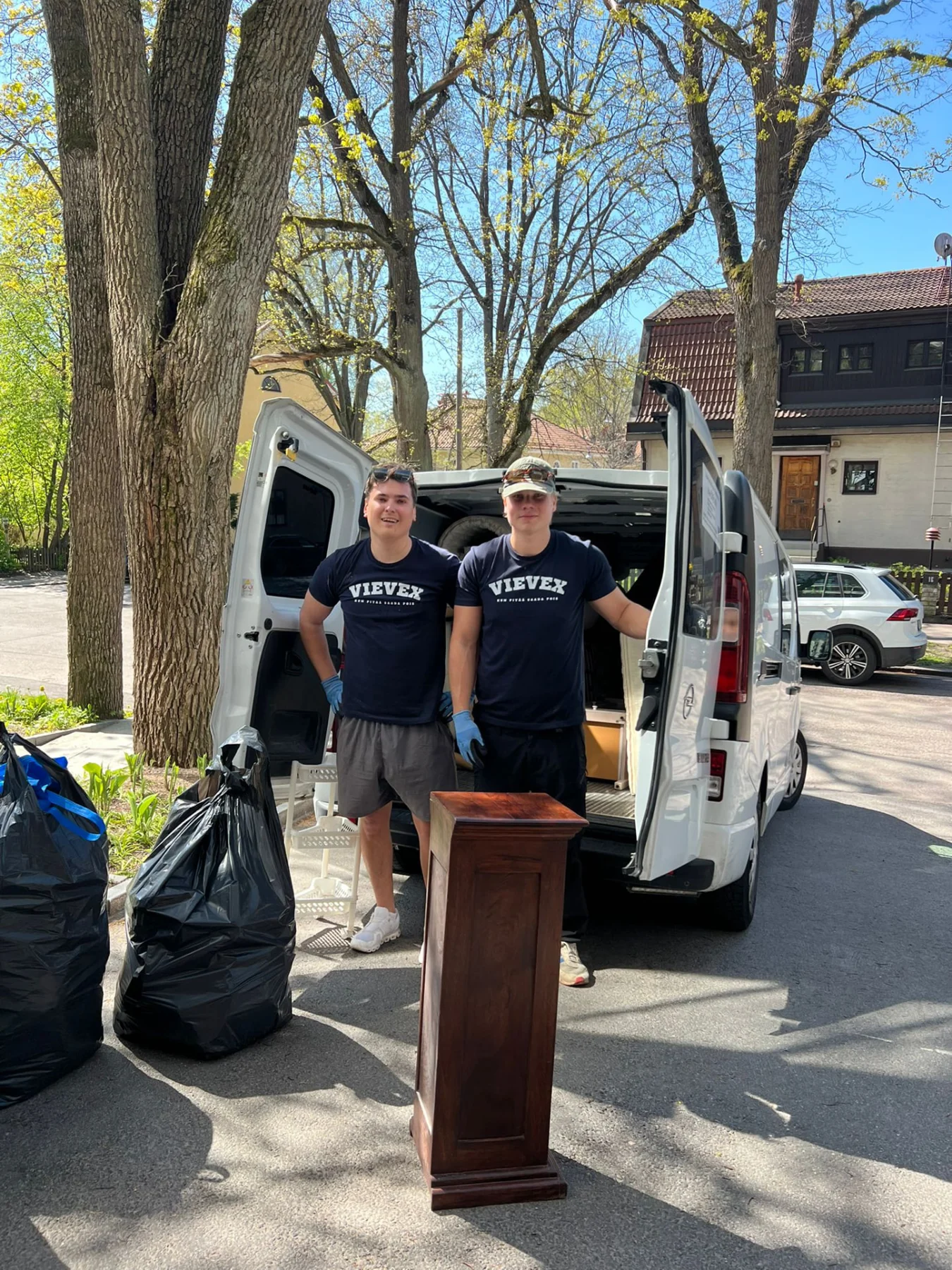
When we arrive, we know what has been agreed and which belongings must be left untouched. Our team sorts, carries and transports the agreed items. You do not need to lift heavy furniture or organise every trip. Unclear instructions are resolved before proceeding.
7. An empty home and the next step
Finally, the agreed scope and handover condition are checked. If booked, end cleaning is completed within the agreed scope. Clearing cannot take away grief, but it can remove the practical workload from your shoulders so you can focus on the things you want to handle yourself.